
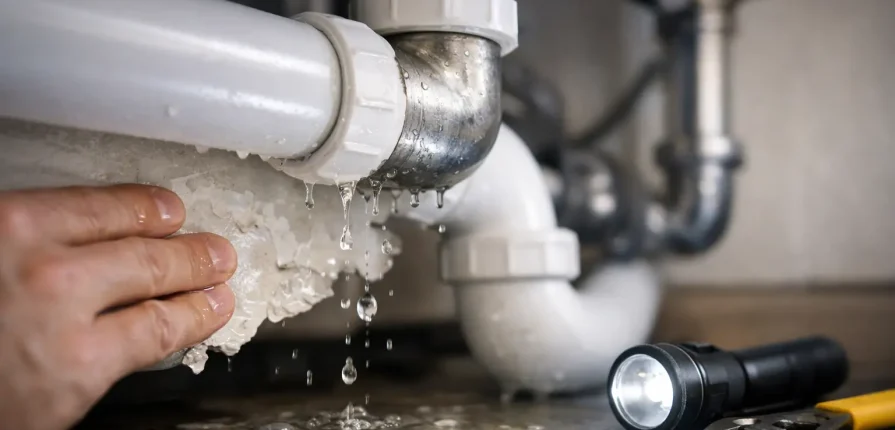
A leaking pipe does not always announce itself with a puddle under the sink. In many South Florida homes and commercial properties, water can escape behind walls, under floors, above ceilings, or beneath a concrete slab for days before the damage becomes obvious. Knowing how to tell if a pipe is leaking can help you act before a small repair turns into damaged drywall, mold growth, higher water bills, or a major disruption to your property.
Start With Changes You Can See, Hear, or Smell
The most obvious sign is standing water near a pipe, fixture, appliance, or wall. Check under kitchen and bathroom sinks, around toilets, near water heaters, behind washing machines, and around refrigerator water lines. A small drip may only appear when a fixture is running, so dry the area first, then check again after using the sink, shower, toilet, or appliance.
Not every leak produces a visible puddle. Look for water stains on ceilings, soft or bubbling paint, warped baseboards, peeling wallpaper, or discoloration around cabinets. A yellow or brown ceiling spot may mean a pipe is leaking above it, though roof leaks and air-conditioning condensation can create similar symptoms. A skilled plumber can determine the source instead of treating the visible stain alone.
Your nose can also provide an early warning. A musty smell in a bathroom, closet, utility room, or along a wall often points to moisture that has been trapped out of sight. In South Florida’s humid climate, that moisture can encourage mold quickly. If the odor keeps returning after cleaning, do not assume it is a surface problem.
How to Tell If a Pipe Is Leaking When Nothing Is Visible
Your water meter is one of the most useful tools for finding a hidden leak. First, make sure no one is using water inside or outside the property. Turn off faucets, pause irrigation, avoid flushing toilets, and make sure appliances such as dishwashers and washing machines are not running. Then check the meter.
Many meters have a small leak indicator that moves when water is flowing. If that indicator continues moving while everything is off, water may be escaping somewhere in the plumbing system. You can also record the meter reading, wait one or two hours without using water, and check it again. A change in the reading is a reason to investigate.
This test does not identify the exact problem. A running toilet, dripping faucet, irrigation leak, water heater relief valve, or underground supply line can all affect the meter. Still, it tells you whether the issue deserves prompt attention.
A water bill that rises without a clear reason is another common clue. Compare it with bills from the same season last year when possible. A higher bill can result from guests, lawn watering, or a change in business operations, but unexplained ongoing use should not be ignored.
Watch for Low Pressure and Fixture Problems
A pipe leak can reduce water pressure, especially if the leak is on a main supply line. You may notice that a shower has become weak, a sink takes longer to fill, or several fixtures lose pressure at once. Low pressure can also come from mineral buildup, a failing pressure regulator, or a municipal supply issue, so it is not proof by itself.
Pay attention to sudden changes. If water pressure was normal last week and is weak today, particularly along with a meter that keeps moving or damp areas on the property, call for a plumbing inspection.
You may also hear water when no fixture is on. A faint hissing, rushing, or trickling sound behind a wall or beneath a floor can indicate a pressurized pipe leak. Listen near bathrooms, kitchens, laundry areas, water heaters, and exterior walls during a quiet time of day. Do not open walls or floors based on sound alone. Professional leak detection can locate the source with far less unnecessary damage.
Check for Signs of a Slab Leak
Homes in South Florida commonly have plumbing lines that run beneath concrete slabs. When one of these pipes leaks, the water may not appear immediately. Instead, watch for warm areas on the floor, damp carpet, loose or cracked flooring, mildew odors, or unexplained moisture along the edges of rooms.
A hot-water slab leak can create a noticeably warm tile or concrete area. You may also find that your water heater runs more often because hot water is constantly escaping. Cool-water leaks can be harder to detect, but they can still cause floor damage, increased water use, and moisture around the foundation.
Foundation movement, cracked flooring, and wet areas outside near the slab can have several causes, including drainage problems. The right response is not to guess. Accurate leak detection helps confirm whether a pipe is involved and allows the repair to be planned around the actual location of the problem.
Do Not Overlook Outdoor and Commercial Property Leaks
Outdoor leaks can waste a surprising amount of water without causing immediate indoor damage. Inspect hose bibs, exposed pipes, irrigation connections, pool equipment areas, and outdoor kitchens. Soggy soil, unusually green patches of grass, water collecting near the building, or a constantly wet area during dry weather may point to an underground line leak.
For property managers and commercial decision-makers, warning signs may show up as recurring ceiling stains, restroom moisture, higher utility costs, wet mechanical rooms, or complaints about low pressure in one section of a building. Multi-unit properties can be especially challenging because the visible damage may be below or beside the actual leak. A fast, organized response limits disruption to tenants, customers, students, patients, and staff.
What to Do if You Suspect a Leak
If water is actively flowing, shut off the nearest fixture valve if you can identify it. For a larger or hidden leak, turn off the main water supply to the property. Every homeowner and facility manager should know where that shutoff is located before an emergency happens.
Take photos of water damage and move belongings away from wet areas when it is safe to do so. Avoid using electrical outlets, appliances, or switches near standing water. If a ceiling is sagging from water, stay out from under it and keep others away from the area.
Call for emergency plumbing repair right away when you have any of these situations:
- A burst pipe or rapidly spreading water
- Water near electrical equipment or outlets
- A ceiling that is bulging, sagging, or actively dripping
- No water pressure throughout the property along with signs of a leak
- Sewage or contaminated water entering living or work areas
For a slow leak, scheduling repair promptly is still the affordable choice. Waiting can allow moisture to damage drywall, flooring, cabinets, insulation, and structural materials. It can also turn a simple pipe repair into a larger restoration project.
Why Professional Leak Detection Matters
It is tempting to open a wall where you see a stain or to assume a leaking toilet is the whole problem. That approach can create more damage and still miss the source. Leak symptoms often overlap, and water can travel a long distance from the pipe before it becomes visible.
An experienced plumber can inspect fixtures, test plumbing lines, assess the meter, and use appropriate diagnostic methods to locate the leak. The best repair depends on the pipe material, the location, the condition of the rest of the plumbing, and whether the issue is isolated or part of a larger failure pattern. An honest explanation of those options helps you make the right decision for your home or property.
If you notice a persistent musty smell, unexplained water use, a new stain, or a wet spot that will not dry out, trust the warning sign. Caliber Plumbing can help identify the cause, explain the repair clearly, and get your plumbing back under control before hidden water damage grows.