
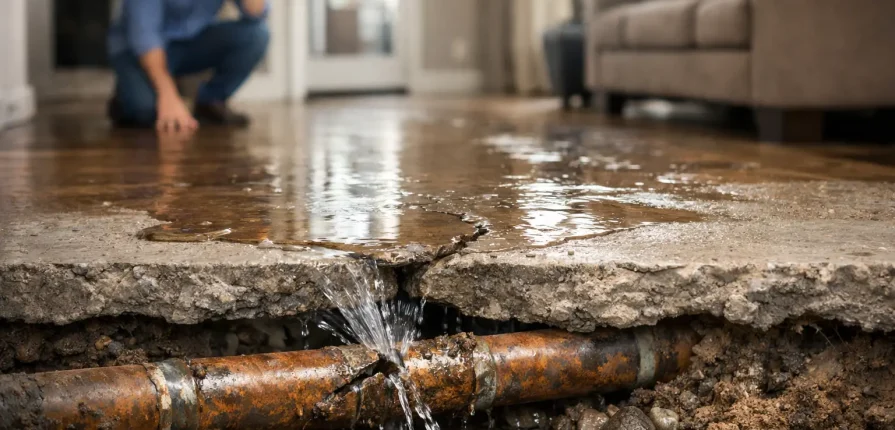
A slab leak does not always announce itself with a puddle on the floor. In many South Florida homes and buildings, it begins beneath the concrete foundation, where a damaged water or drain line can leak for days or weeks before the evidence becomes obvious. If you are wondering what happens if you have a slab leak, the short answer is that water can damage flooring, weaken sections of the foundation, raise utility costs, and create mold concerns if the problem is left untreated.
The good news is that a slab leak can be located and repaired without guessing or tearing up an entire property. The key is recognizing the signs early and calling an experienced plumber before a hidden leak turns into a larger restoration project.
What Happens If You Have a Slab Leak Under Your Home?
A slab leak occurs when a plumbing pipe running beneath a concrete slab develops a crack, hole, failed connection, or corrosion damage. Depending on the pipe involved, it may be a pressurized hot or cold water line, or it may be a drain line. Water then escapes into the soil beneath the building and can work its way upward into the slab, walls, flooring, or surrounding areas.
With a pressurized water-line leak, the water may run continuously. That is why homeowners often first notice an unusually high water bill, the sound of water when no fixture is running, or a water heater that seems to run more often than normal. A hot-water slab leak can also create a warm spot on tile, wood, or concrete flooring.
A drain-line leak can be less obvious because it only leaks when water is being used. Still, it can allow wastewater to saturate soil and structural areas beneath the property. For commercial buildings, condominiums, medical offices, and schools, that can become a sanitation and operational concern quickly.
Not every slab leak causes the same level of damage. It depends on the size of the leak, the pipe material, how long it has been active, soil conditions, and the construction of the building. But waiting rarely makes the repair simpler or less expensive.
The Damage Can Spread Beyond the Pipe
The pipe repair itself may be straightforward. The effects of uncontrolled water are what raise the stakes.
Higher water bills and wasted water
Even a small leak can waste a surprising amount of water over time. If your monthly usage increases without a clear reason, do not assume it is a meter mistake. A hidden plumbing leak is one possible cause, especially if you have not changed irrigation habits, occupancy, or water use.
For a property manager, unexplained usage across a multifamily or commercial property deserves prompt investigation. The cost can continue accumulating every day the leak remains active.
Damaged floors, walls, and finishes
Moisture can travel through concrete and emerge where you least expect it. You may see damp carpeting, lifting vinyl, warped wood flooring, loose tile, discolored baseboards, or stains along lower walls. In some cases, flooring adhesives break down before a visible wet spot appears.
South Florida humidity can make these symptoms harder to interpret. A room may feel damp because of an air-conditioning issue, condensation, or outdoor moisture. That is why professional leak detection matters. It identifies whether the moisture is actually coming from a plumbing line below the slab.
Foundation and structural concerns
A slab leak does not automatically mean a home is in danger of major foundation failure. Still, persistent water beneath a slab can change the soil conditions that support it. Over time, that may contribute to settling, movement, cracks, or uneven areas, particularly when a large leak has been active for a long period.
You may notice cracks in tile, drywall, or exterior concrete. Those cracks can have many causes, so they should not be treated as proof of a slab leak. They are, however, a reason to have the plumbing system checked when they appear alongside moisture, high water bills, or other leak symptoms.
Mold and indoor air quality concerns
Where moisture reaches drywall, carpeting, cabinets, or other porous materials, mold can develop. That is especially true in warm, humid climates. A musty odor, recurring mildew, or unexplained moisture around flooring should not be ignored.
The plumbing leak must be stopped first. Cleaning or replacing damaged materials without correcting the source only allows the issue to return.
Warning Signs You May Have a Slab Leak
Slab leaks are hidden, but they often leave clues. Calling for help when you notice one or two signs can prevent a more disruptive repair later. Watch for these common symptoms:
- A water bill that rises even though your usage has not changed
- The sound of running or hissing water when faucets, appliances, and irrigation are off
- Warm areas on the floor or a hot-water heater that cycles more frequently
- Damp carpet, wet flooring, buckling materials, or unexplained stains near the base of a wall
- A musty smell, mold growth, or indoor humidity that seems limited to one area
- Low water pressure that develops without an obvious fixture problem
- Cracks in flooring, walls, or concrete that appear with other water-leak symptoms
A homeowner can perform a basic check by turning off all water-using fixtures and watching the water meter. If the meter continues moving, there may be a leak somewhere on the property. That test cannot identify the leak location or confirm that it is beneath the slab, but it is useful information to share with a plumber.
Why Fast Leak Detection Makes a Difference
Finding a slab leak should be a diagnostic process, not a demolition project. Skilled technicians can use pressure testing, acoustic listening equipment, thermal imaging, and other methods to narrow down the location of a leak. The right approach depends on the plumbing layout, pipe type, flooring, and whether the issue involves a water line or drain line.
Accurate detection helps avoid unnecessary damage to finished floors and reduces the chance of repairing the wrong area. It also allows the plumber to explain the condition clearly before work begins, including what caused the leak and which repair options make sense.
At Caliber Plumbing, the goal is to give property owners a straightforward explanation and a practical repair plan, not add confusion during an already stressful situation. A clean work area and careful protection of surrounding finishes matter just as much when the repair is inside an occupied home, office, classroom, or condominium unit.
Repair Options Depend on the Pipe and Property
There is no one-size-fits-all slab leak repair. In some cases, the best option is a targeted repair through a small opening in the slab. This can be effective when the damage is isolated and the pipe is otherwise in good condition.
Another option may be rerouting the affected water line through walls, ceilings, or attic areas. Rerouting can avoid breaking through a finished slab, but it may involve access work in other parts of the building. It is often worth considering when pipes below the slab are aging, corroded, or have failed more than once.
For older homes or properties with repeated leaks, partial or whole-home repiping may be the more dependable long-term choice. It costs more upfront than patching one location, but it can reduce repeat repairs when the existing piping system has reached the end of its useful life.
A good plumber will discuss the trade-offs honestly. The least expensive repair today is not always the most cost-effective option over the next several years. Factors such as the age of the plumbing, accessibility, prior leaks, occupancy needs, and planned renovations all affect the decision.
What to Do While You Wait for a Plumber
If you suspect an active slab leak, act quickly but avoid making the situation worse. Shut off the main water supply if water is surfacing, flooring is becoming saturated, or the leak appears significant. If there is no visible water but the meter is running, limiting water use can reduce waste until a plumber evaluates the system.
Move furniture, electronics, documents, and valuables away from damp areas. Do not pull up flooring or break into concrete to search for the pipe yourself. That can create more damage and make it harder to diagnose the source accurately. Take photos of wet areas, stains, and any meter reading changes for your records.
For an occupied commercial or multifamily property, notify affected tenants or staff and keep people away from slick floors. If the leak involves suspected wastewater, treat it as a sanitation issue and arrange professional service promptly.
A slab leak is one of those plumbing problems that gets more expensive the longer it stays hidden. If you notice the warning signs, schedule professional leak detection early so you can protect your property, control repair costs, and get back to normal with confidence.