
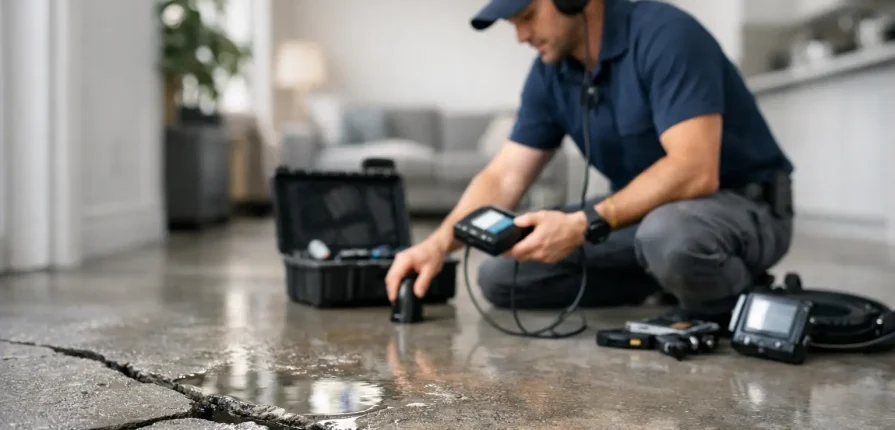
A warm spot on a tile floor, a water bill that suddenly climbs, or the quiet sound of water moving when every fixture is off can point to a problem beneath your feet. So, what is slab leak detection? It is the professional process of finding a leaking water or drain line located beneath a concrete foundation without tearing up the entire floor to search for it.
For South Florida homeowners and property managers, a slab leak is not a repair to put off. Water can travel beneath flooring, weaken materials, encourage mold growth, and create damage that becomes much more expensive the longer it remains hidden. The right diagnosis helps identify the leak’s location and cause so the repair can be planned carefully.
What Is Slab Leak Detection?
Many homes and commercial buildings have plumbing lines that run under or through the concrete slab foundation. Those pipes are out of sight, which makes a leak harder to spot than a dripping faucet or a leak under a kitchen sink. Slab leak detection uses specialized testing methods to confirm whether a hidden pipe is leaking and narrow down where the problem is occurring.
Detection is not the same as repair. The detection process answers key questions first: Is there actually a leak? Is it on a pressurized water line or a drain line? Where is the likely source? How serious is the water loss? Once a highly skilled plumber has those answers, they can recommend the repair option that makes the most sense for the building, the pipe condition, and the budget.
A proper diagnosis matters because water under a slab does not always appear directly above the damaged pipe. Water follows the path of least resistance. It may show up at a baseboard, along a wall, through grout lines, or at a low point in the flooring several feet away from the actual leak.
Signs You May Need Slab Leak Detection
Not every higher water bill means there is a slab leak, but certain combinations of symptoms deserve prompt attention. A noticeable increase in water use with no change in household habits is one common warning sign. Another is a water meter that continues moving after all faucets, appliances, irrigation equipment, and fixtures are turned off.
You may also notice warm or unusually damp areas on the floor. This can happen when a hot-water line leaks below the slab. Carpet may feel wet, flooring can begin to lift or warp, and tile can loosen as moisture affects the materials below it.
Listen for water movement when the building is quiet. A hissing, rushing, or trickling sound with no fixture running can indicate a pressurized line leak. Low water pressure at multiple fixtures, musty odors, mold or mildew near walls, and cracks in flooring or walls may also be connected to ongoing moisture below the foundation.
For commercial properties, condominium buildings, schools, and medical facilities, the warning signs can be less obvious. A maintenance team may see repeated hot-water loss, unexplained utility costs, moisture appearing in a hallway, or recurring damage in the same section of a building. In these settings, locating the source quickly helps protect occupied spaces and avoid unnecessary disruption.
How Professional Slab Leak Detection Works
An expert plumber begins with the basics. They will ask when the symptoms started, review where moisture has appeared, inspect visible plumbing, and look for other possible sources such as appliance leaks, roof leaks, irrigation issues, or a failing fixture. This step prevents a hidden-pipe diagnosis from being made too quickly.
Next, the plumber may perform pressure testing on the water system. If pressure drops when the supply is isolated, that supports the possibility of a leak on a pressurized line. A meter test can also help confirm that water is being lost when no water should be in use.
Once testing points to a concealed leak, specialized tools can help narrow the location. Depending on the situation, this may include electronic leak detection equipment that listens for the sound of water escaping from a pressurized pipe. Thermal imaging can identify unusual temperature patterns, which is especially useful when a hot-water line is involved. Moisture meters may help trace where water has moved into flooring or wall materials.
Drain line leaks require a different approach because those pipes are not under constant pressure. A plumber may use a camera inspection, isolation testing, or other diagnostic methods to evaluate the drainage system. The best method depends on the pipe material, the building layout, the signs present, and whether the leak occurs only when certain fixtures are used.
No detection method is perfect by itself. Thick concrete, reinforcing steel, noisy surroundings, multiple plumbing lines, and extensive water migration can make the work more challenging. That is why experienced technicians combine test results, equipment readings, and a careful understanding of the property’s plumbing layout rather than relying on one tool alone.
What Happens After the Leak Is Located?
Finding the leak allows the repair to become more precise. In some cases, the most practical solution is a direct access repair, where a small, targeted section of flooring and concrete is opened to reach the damaged pipe. This can be a good option when the pipe has a single, accessible failure and the surrounding line is still in good condition.
In other cases, rerouting or repiping part of the plumbing system may be the better long-term choice. If an older pipe has developed repeated leaks, repairing one spot may not address the larger problem. A reroute can move a water line away from the slab so future access is easier. The trade-off is that the initial repair may involve more labor and materials.
The right recommendation should be clear about both options. A professional plumber should explain what was found, show the evidence when possible, describe the likely cause, and outline the expected work before repair begins. That transparency is particularly valuable for property managers who need to coordinate access, tenant communication, and repair approvals.
Why Fast Action Protects Your Property
A slab leak can waste a surprising amount of water, but the water bill is only one part of the concern. Prolonged moisture can damage flooring, cabinetry, drywall, and personal belongings. It can also create conditions that support mold growth, particularly in South Florida’s humid climate.
There is also a foundation concern. Not every slab leak causes structural damage, and the risk depends on factors such as the amount of water, soil conditions, duration of the leak, and building design. Still, continuous water movement beneath a foundation is a reason to act quickly rather than wait for visible damage to worsen.
For businesses and multi-unit properties, delaying the diagnosis can lead to operational interruptions, tenant complaints, health and safety concerns, and larger restoration costs. Early detection gives decision-makers more control over scheduling and repair choices.
Choosing a Plumber for a Hidden Leak
Slab leak work calls for more than a quick guess based on a wet floor. Look for a plumbing company that performs systematic testing, uses appropriate diagnostic equipment, and explains what the results mean in plain language. The goal is to avoid unnecessary demolition while still reaching a reliable diagnosis.
Ask whether the plumber can distinguish between a water line leak, a drain line issue, and another moisture source. It is also reasonable to ask how the repair recommendation was determined and whether a targeted repair or reroute is more appropriate for the property’s pipe condition.
Caliber Plumbing provides slab leak detection and repair with experienced technicians who focus on clear explanations, clean work areas, and practical repair recommendations for South Florida homes and facilities.
If you notice unexplained water use, warm flooring, moisture indoors, or the sound of running water with everything turned off, schedule professional testing before the problem has more time to travel. A careful diagnosis now can protect the parts of your property that are hardest and most costly to repair later.