
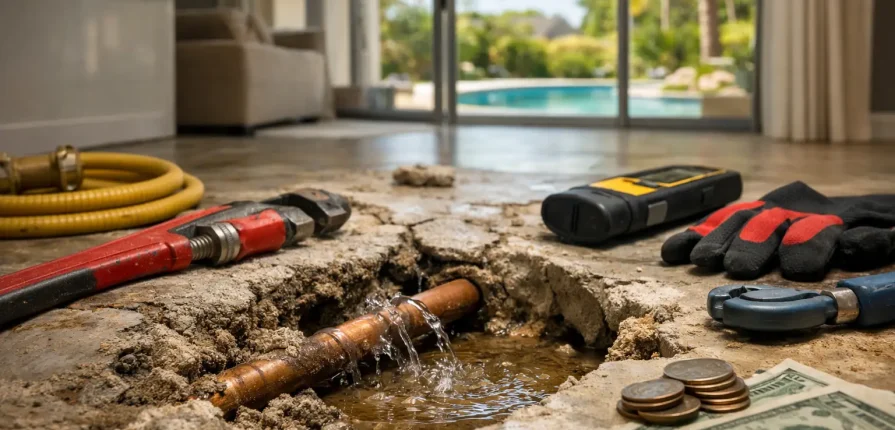
A warm spot on the floor, a water bill that suddenly jumps, or the sound of water moving when every fixture is off can point to a leak beneath your concrete slab. The first question most property owners ask is about slab leak repair cost. The honest answer is that the price depends less on the word “leak” and more on where the damaged pipe is located, how it can be reached, and whether the problem is isolated or part of a failing pipe system.
For a South Florida homeowner, condo association, or facility manager, fast professional diagnosis can make a major difference. A hidden leak can waste water for weeks while it damages flooring, weakens materials, encourages mold growth, and disrupts business or daily life.
What Affects Slab Leak Repair Cost?
A slab leak is a water-line leak that occurs under or within the concrete foundation of a building. Finding and repairing it takes more than opening a wall or tightening a fitting. An expert plumber needs to confirm the leak, identify the affected line, and recommend a repair method that solves the problem without creating unnecessary damage.
The biggest cost factor is access. If the leak is in a short, reachable section of pipe and the flooring can be opened and restored easily, the repair is usually more straightforward. If the line runs beneath tile, hardwood, built-in cabinets, equipment, or a heavily used commercial area, the work becomes more involved.
The condition of the plumbing system matters just as much. One damaged spot in an otherwise sound line may be repaired with a targeted fix. Repeated leaks in older copper piping may point to corrosion or widespread wear. In that case, repeatedly breaking the slab for one repair at a time may cost less upfront but become more expensive over the life of the property.
Other factors that influence the final price include the type and size of the pipe, whether it carries hot or cold water, how deep it sits below the slab, local permit requirements, and the need to restore concrete, flooring, drywall, or landscaping after the plumbing work is complete.
Typical Slab Leak Repair Cost Ranges
A professional inspection and electronic leak detection service often cost a few hundred dollars, depending on the property layout and the complexity of the problem. That diagnostic step is valuable because it helps avoid destructive guessing and gives the plumber a clearer plan before repair work begins.
For a localized pipe repair with relatively simple access, property owners may see costs starting in the high hundreds and moving into several thousand dollars. The lower end generally applies when the leak is easy to pinpoint and the affected pipe section is limited. Costs rise when concrete must be opened, the pipe is deep beneath the slab, or flooring restoration is extensive.
A reroute, also called a repipe around the failed underground section, can range from a few thousand dollars to well over $10,000. This approach moves water through new piping in walls, ceilings, or other accessible areas rather than repairing the line under the slab. It can be a smart long-term choice when a property has recurring leaks or aging lines that are likely to fail again.
Tunneling beneath the foundation is another option for certain homes. It avoids cutting through interior floors, but excavation, safety planning, and access conditions can make it one of the more expensive approaches. For larger homes or complex commercial properties, costs can reach well into five figures.
These are planning ranges, not a quote. A dependable plumbing contractor should inspect the issue, explain the available repair paths, and provide clear pricing before work begins whenever conditions allow.
Detection Is Not an Extra Step
Some property owners try to save money by skipping professional leak detection and going straight to opening the floor where they suspect the problem is. That can lead to unnecessary demolition, missed leaks, and higher restoration costs.
A skilled technician may use pressure testing, acoustic listening equipment, thermal tools, or other diagnostic methods to narrow down the source. In a multi-unit property, this process can also help determine whether the issue is in a shared line, a unit-specific line, or another building system. Accurate detection helps protect the budget because it supports a repair plan based on evidence rather than guesswork.
Repair Methods and Their Trade-Offs
There is no single best slab leak repair for every South Florida property. The right method depends on the pipe condition, leak location, building construction, budget, and how long the owner plans to keep the property.
A direct spot repair involves accessing the leaking pipe through the slab, repairing or replacing the damaged section, then patching the concrete. This may be the most affordable option for one isolated failure. The trade-off is disruption to the floor and the possibility that another weak section of older piping could leak later.
A pipe reroute bypasses the problem area with new piping. It can limit concrete work and often provides a better long-term answer for homes with recurring underground pipe failures. However, it may require work inside walls or ceilings, along with patching and painting afterward.
For properties with widespread pipe deterioration, a larger repiping project may be recommended. This has a higher initial cost, but it can reduce the uncertainty of repeated emergency repairs. For condo boards, schools, medical offices, and commercial facilities, that predictability can be worth considering when a plumbing failure would interrupt occupants, staff, or customers.
An honest recommendation should include the pros and cons of each option. The lowest immediate price is not always the lowest ownership cost, especially when a building has a history of leaks.
Costs That May Not Be Included in the Plumbing Quote
When comparing slab leak repair estimates, ask what the price covers. Plumbing work may include detection, access, pipe repair, pressure testing, and basic concrete patching. It may not include full flooring replacement, cabinet work, drywall finishing, painting, mold remediation, or restoration by separate trades.
This does not mean a quote is incomplete. It means property owners need a clear picture of the entire project. A professional plumber should explain where the plumbing scope ends and what restoration work may follow.
If a leak has caused visible water damage, take photos before repairs begin. Keep invoices, inspection reports, and notes about when you first noticed the issue. Insurance coverage varies widely. Some policies may help with resulting water damage but exclude the cost of repairing the failed pipe itself. Contact your insurer promptly and avoid assuming coverage before reviewing the policy.
Signs You Should Call Before Costs Climb
A slab leak rarely improves on its own. The earlier it is found, the more repair options may be available. Call for professional help if you notice a higher-than-normal water bill, a water meter that continues moving with fixtures off, damp or warm flooring, low water pressure, mildew odors, cracks in flooring, or unexplained water around the foundation.
For commercial and multi-family properties, also watch for complaints from lower-level units, recurring hot-water loss, unexplained boiler or water-heater cycling, and moisture near common walls. A small hidden leak can affect more than one space before anyone sees a puddle.
Do not wait for flooring to buckle or water to appear indoors. Shutting off the main water supply may reduce active damage if the leak is severe, but it is not a repair. An emergency plumber can help assess the situation and determine the next step.
How to Get a Fair Slab Leak Repair Estimate
A fair estimate starts with a proper diagnosis, not a guess based only on a water bill or a damp floor. Ask the plumber to explain the suspected location, the repair method being recommended, and why it fits the condition of your plumbing system.
You should also ask whether the price includes leak detection, permits if required, testing after the repair, concrete access or patching, and cleanup. If rerouting is recommended, ask why a direct repair is not the better choice. If a direct repair is recommended for an older system with prior leaks, ask about the likelihood of future failures.
Caliber Plumbing helps South Florida property owners understand the problem before moving forward. Clear communication, clean workmanship, and highly skilled service matter when the repair involves the foundation beneath your home or facility.
A slab leak can feel overwhelming, but the next step is simple: get the leak located accurately, review the repair choices, and act before hidden water damage has time to spread.