
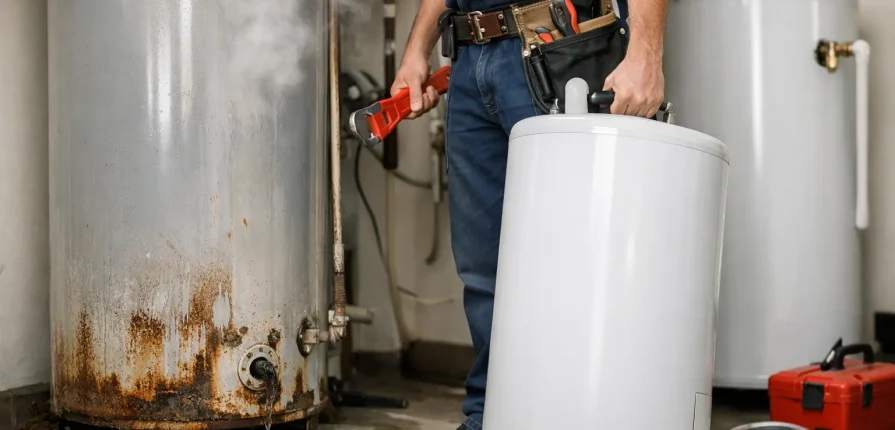
A water heater usually gives you warning before it quits completely. The problem is that many of the most common signs water heater needs replacement can look minor at first: water that is slightly cooler, a small puddle near the tank, or a new rumbling sound during a shower. In South Florida, where hot water is part of daily life and humidity can make leaks harder to ignore, acting early can help prevent water damage, disrupted routines, and an emergency replacement.
For homeowners, property managers, and facility teams, the right answer is not always to replace the unit immediately. A skilled plumber can often repair a heating element, thermostat, valve, or connection. But when the tank itself is deteriorating or repairs are becoming frequent, replacement is usually the more practical and cost-conscious choice.
8 Signs Water Heater Needs Replacement
1. Your water heater is nearing or past its expected service life
A conventional tank water heater commonly lasts about 8 to 12 years, though actual lifespan depends on water quality, maintenance history, installation conditions, and how heavily the unit is used. A water heater serving a large family, condominium common area, restaurant, medical office, or other high-use property may wear out sooner.
Check the serial number on the manufacturer label if you are unsure of the age. The first letters and numbers often identify the production date, although the format varies by manufacturer. If an older unit begins leaking, losing heating capacity, or requiring repeated service, putting more money into repairs may not make sense.
Age alone does not mean the heater has failed. A well-maintained unit can sometimes continue operating reliably. Still, an aging tank deserves closer attention because internal corrosion can progress without being visible from the outside.
2. There is water around the base of the tank
A puddle near a water heater should never be ignored. It may come from a loose connection, a leaking temperature and pressure relief valve, condensation, or a nearby plumbing issue. Some of these problems are repairable and should be diagnosed promptly.
The more serious possibility is a leaking tank. Over time, sediment, corrosion, and normal expansion and contraction can weaken the tank lining. Once the tank itself has developed a crack or corrosion hole, replacement is generally the only dependable solution.
Do not assume a small leak will stay small. Even a slow drip can damage flooring, walls, storage areas, and equipment nearby. For commercial and multifamily properties, it can also affect tenants, operations, and lower-level units. If water is actively spreading, shut off the water supply to the heater if it is safe to do so and call for emergency plumbing service.
3. Your hot water is rusty, brown, or cloudy
Discolored hot water can point to corrosion inside the water heater. If brown, rusty, or reddish water appears only when you run hot water, the tank or its internal components may be deteriorating. If the same discoloration appears with cold water, the issue may be in the pipes instead.
A plumber can determine where the problem originates and whether replacing the anode rod may help. The anode rod is designed to corrode before the steel tank does. Replacing it at the right time can extend a water heater’s life, but it cannot reverse corrosion that has already damaged the tank.
Cloudy water may also be related to mineral buildup or air in the plumbing. The cause matters. Rather than guessing, have the water heater and plumbing system inspected so the repair recommendation is based on the actual condition of the equipment.
4. The tank makes popping, rumbling, or banging sounds
Water heaters are not completely silent, but loud or new noises are worth checking. A popping or rumbling sound often occurs when sediment builds up along the bottom of a tank. Water becomes trapped below the sediment and bubbles through it as the unit heats.
Sediment is particularly hard on a water heater because it makes the system work longer to heat water. That can increase energy use, reduce available hot water, and overheat the bottom of the tank. Flushing may help when buildup is caught early, but heavy sediment in an older unit may signal that replacement is approaching.
Do not confuse normal operating sounds with sharp banging from pipes or a sudden screeching noise from a valve. Those may have different causes. An experienced technician can isolate the source before recommending repair or replacement.
5. Hot water runs out much faster than it used to
A short shower that turns cold is frustrating, but it does not automatically mean you need a new water heater. On an electric model, a failed heating element may be repairable. On gas units, a burner, pilot, thermostat, or control issue may be responsible.
However, declining hot-water capacity in an older tank can also mean sediment has taken up space inside the unit. A 50-gallon water heater with heavy buildup does not have the same usable capacity it had when new. If demand has increased because of more occupants, additional fixtures, or greater facility use, the existing unit may simply no longer be properly sized.
Replacement gives you an opportunity to select the right system for the property. That may mean another conventional tank, a larger-capacity tank, or a tankless water heater. Tankless units can provide hot water on demand, but they require proper sizing, venting or electrical capacity, and installation. The best choice depends on your household or facility’s usage, not just the advertised efficiency of a new model.
6. Your utility bills are rising without a clear reason
An older water heater can lose efficiency as sediment accumulates and components wear down. The system may run longer or work harder to produce the same amount of hot water. That extra strain can show up on electric or gas bills.
A higher bill does not prove the water heater is the cause. South Florida cooling costs, pool equipment, appliances, and changes in occupancy can all affect utility usage. But if rising bills occur alongside reduced hot water, noises, or leaks, the water heater should be inspected.
In some situations, a repair restores acceptable performance. In others, replacing a failing unit with a properly sized modern model can reduce waste and provide more dependable service. The decision should account for the unit’s age, repair cost, expected remaining life, and the consequences of a failure at your property.
7. Repairs are becoming more frequent
One isolated repair is normal. Replacing a valve, thermostat, heating element, or igniter can be a sensible way to keep a relatively new water heater operating. The calculation changes when service calls become recurring or when multiple components begin failing on an older unit.
Ask a straightforward question: if you approve this repair, what condition will the tank itself be in? A repair may solve today’s problem while an aging, corroded tank remains the next likely failure. For a homeowner, that can mean another unexpected expense. For a property manager, it can mean avoidable disruption to residents or operations.
Caliber Plumbing provides clear explanations so customers can compare a reasonable repair with the practical value of replacement. The goal is not to replace equipment that still has useful life. It is to prevent a failing water heater from becoming a larger plumbing emergency.
8. You see corrosion on connections or the tank exterior
Rust around water connections, valves, fittings, or the top of the tank deserves a professional inspection. Sometimes corrosion is limited to a replaceable fitting or caused by a small connection leak. Other times, it indicates long-term moisture exposure and deeper deterioration.
Look carefully for rust streaks, flaking metal, swollen areas, or moisture below the jacket of the heater. Do not try to scrape, tighten, or disassemble corroded gas or electrical connections yourself. Water heaters combine water, pressure, heat, electricity, and, in many homes, natural gas. A qualified plumber can assess the condition safely and explain the appropriate next step.
When to Call for Water Heater Service Right Away
Do not wait for a convenient time if the tank is actively leaking, there is no hot water in a home or occupied facility, you smell gas, or the temperature and pressure relief valve is discharging continuously. Turn off the unit if you can do so safely, keep people away from standing water near electrical equipment, and call for professional help.
For less urgent symptoms, scheduling an inspection early gives you more options. You can plan a replacement, choose the right capacity, and avoid making a rushed decision after a tank fails. A dependable water heater should be one part of the property you rarely have to think about. If yours is asking for attention through leaks, noise, rusty water, or unreliable heat, addressing it now can keep a manageable repair from turning into a costly interruption.