
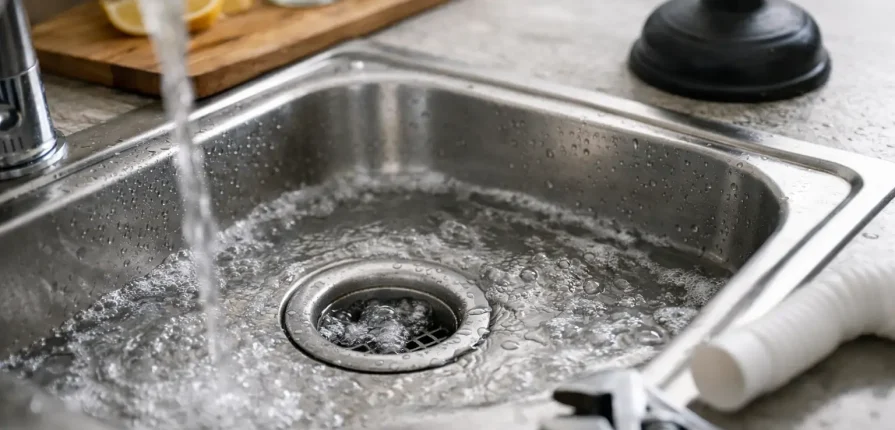
A kitchen sink that takes an extra minute to empty may not seem urgent, but it is usually giving you an early warning. If you are asking why kitchen sink drains slowly, the answer is often a developing blockage somewhere between the drain opening and the main sewer line. Addressing it while water still moves can help prevent a messy backup, unpleasant odors, and an interrupted kitchen.
For South Florida homeowners, property managers, and business owners, a slow kitchen drain is especially worth taking seriously. Busy kitchens produce grease, food residue, soap film, and debris every day. In older homes, condominium buildings, restaurants, schools, and medical properties, the problem may also involve shared piping or years of buildup farther down the line.
Why Kitchen Sink Drains Slowly: The Most Common Causes
Most slow kitchen drains start with a partial clog, not a completely blocked pipe. Water can still pass through a narrow opening, but it does so slowly. Each use of the sink adds more material to the restriction until the drain eventually stops altogether.
Grease and cooking oil buildup
Grease is one of the most common causes of kitchen drain problems. Hot grease may look harmless when it is poured into the sink, especially with running water, but it cools as it travels through the plumbing. It then sticks to pipe walls and catches other debris.
Over time, that coating becomes thick enough to restrict water flow. Foods that contain butter, oils, bacon fat, sauces, mayonnaise, and meat drippings can all contribute. Dish soap helps wash grease off plates, but it does not guarantee that the grease will stay dissolved all the way through the drain system.
Food scraps and garbage disposal residue
A garbage disposal is helpful, but it is not designed to process every food item. Fibrous materials such as celery, corn husks, onion skins, and potato peels can wrap around disposal components or collect in the drain. Rice, pasta, coffee grounds, flour, eggshells, and starchy foods can also expand, clump together, or settle into the trap.
Even when the disposal seems to run normally, residue can build up in the disposal chamber or the drain pipe below it. A slow drain with a disposal may need more than a quick rinse. The disposal, drain connection, and trap all need to be checked.
Soap film, detergent, and mineral deposits
Kitchen sinks collect more than food waste. Soaps and detergents can leave a sticky film that traps grease and small particles. In areas with mineral-heavy water, deposits may gradually narrow the inside of pipes as well.
This buildup usually develops slowly, which is why many customers first notice it after weeks or months of slightly sluggish drainage. If both sides of a double-bowl sink drain slowly, the restriction is often beyond the point where the two drains connect.
A clog in the P-trap or branch drain
The curved pipe directly under the sink is called the P-trap. It holds water to stop sewer gases from entering the room, but its shape also makes it a common collection point for debris. A trap clog may be relatively close to the sink and accessible to an experienced plumber.
If the trap is clear, the obstruction may be farther along in the branch drain inside the wall or under the floor. That is where professional drain cleaning becomes more valuable. A technician can identify the location of the blockage and clear it without damaging the pipe or simply pushing the problem deeper.
Venting or larger sewer-line concerns
Not every slow kitchen drain is caused by food buildup. Plumbing drains need proper venting so water can flow freely. A venting problem can create gurgling, slow drainage, or changes in the sink’s water level.
A larger drain-line issue is also possible when multiple fixtures are affected. If the kitchen sink drains slowly and nearby fixtures gurgle, back up, or drain poorly, the issue may extend beyond the kitchen line. Tree roots, pipe damage, scale buildup, or a blockage in a shared line can require professional diagnosis, particularly at commercial buildings and condominium properties.
Symptoms That Tell You the Problem Is Getting Worse
A slow drain rarely fixes itself. Watch for water standing in the sink after washing dishes, bubbling or gurgling noises, foul odors, or water rising into the other basin of a double sink. These symptoms indicate that water is meeting resistance in the drain.
Pay close attention if running the garbage disposal causes water to back up into the sink, or if the dishwasher drains and water appears in the kitchen basin. The dishwasher often connects to the kitchen drain, so a restricted line can affect both appliances.
For facility managers, recurring slow drainage at the same sink deserves a service call even if staff can temporarily clear it. Repeat clogs may point to improper use, undersized piping, a grease issue, or an obstruction farther down the system. Finding the underlying cause is usually less disruptive than responding to a full backup during business hours.
Safe Steps to Take Before Calling a Plumber
If the sink is draining slowly but is not backed up, start by limiting what goes down the drain. Stop putting grease, food scraps, and coffee grounds into the sink. Avoid running the garbage disposal repeatedly if it hums, struggles, or causes water to rise.
You can remove the sink strainer and clean away visible debris. For a disposal sink, turn off power at the breaker before inspecting the unit. Never place your hand inside a garbage disposal. If an item is stuck, use the proper disposal wrench or have a plumber handle it.
A plunger can sometimes help loosen a minor clog. For a double-bowl sink, seal the opposite drain opening before plunging so pressure is directed into the blocked line. Use controlled, firm strokes rather than excessive force, especially if the plumbing is older or you are unsure of the pipe condition.
Do not rely on chemical drain cleaners. Their heat and corrosive ingredients can damage older pipes, weaken fittings, harm disposal components, and create a safety risk for anyone who later opens the drain. They also often burn a small channel through the clog without removing the grease and debris that caused it. The drain may appear better briefly, then clog again.
When a Slow Kitchen Drain Needs Professional Service
Call an expert plumber when simple cleaning does not restore normal drainage, the issue returns, or water begins backing up. Professional service is the right next step when you smell sewer odors, hear consistent gurgling, see leaks under the sink, or notice that more than one fixture is affected.
A skilled technician can inspect the garbage disposal, trap, drain connections, and accessible piping before determining the proper clearing method. Depending on the cause, the repair may involve removing a localized obstruction, cleaning the branch line, repairing a leaking or damaged drain component, or investigating a deeper blockage.
There is a trade-off between waiting and calling early. Waiting may seem less expensive when the sink still drains, but a complete blockage can lead to water spilling onto cabinets, flooring, equipment, or inventory. Early drain cleaning is often simpler, cleaner, and easier to schedule than an emergency stoppage removal.
At a condominium, retail space, school, or medical facility, the decision may also involve more than one occupant. A backup in a shared kitchen or breakroom can disrupt staff and create sanitation concerns. A professional diagnosis helps determine whether the issue is isolated to one fixture or connected to a larger building drain problem.
Keeping the Kitchen Drain Moving After the Repair
Once the drain is clear, small habits make a real difference. Collect cooled cooking grease in a container and dispose of it in the trash instead of the sink. Scrape plates into the garbage before washing them, and use the disposal only for small, appropriate food particles.
Run cold water when using the disposal and let it continue briefly after the grinding stops. Cold water helps keep fats firmer as they move through the disposal rather than melting into a coating inside the drain. Periodic professional maintenance can also be a practical choice for high-use kitchens, commercial spaces, and properties with recurring drain issues.
A kitchen sink should empty promptly and quietly. When it does not, treat the slowdown as a repair signal, not a kitchen inconvenience to work around. Caliber Plumbing can provide clear answers, tidy drain service, and experienced help before a slow sink turns into a disruptive backup.