
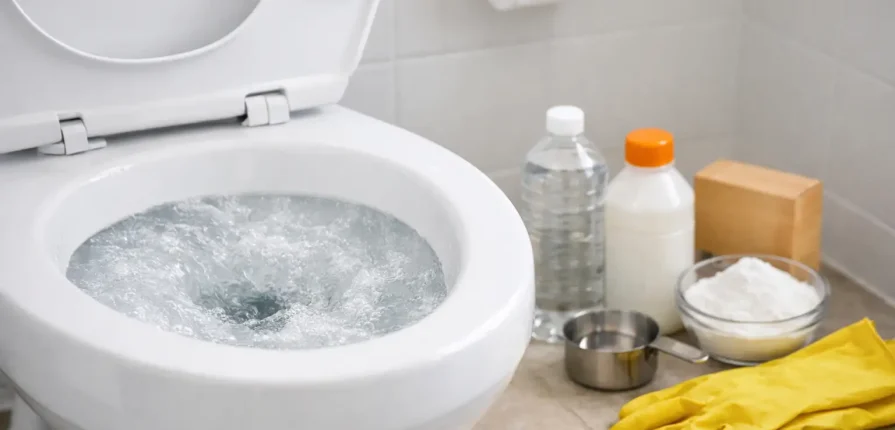
A toilet that starts rising instead of draining can turn a normal morning into a cleanup emergency fast. If you are searching for how to unclog toilet without plunger, the first goal is not to force the clog through. It is to stop an overflow, protect the bathroom floor, and use a method that will not damage the fixture or pipes.
Most simple toilet clogs can be cleared with a few common household items. But the method matters. South Florida homes, condos, and commercial properties can also have deeper drain-line issues that no amount of dish soap or hot water will solve. Knowing when to try a safe fix and when to call an expert plumber can prevent a small stoppage from becoming water damage.
Stop the Toilet From Overflowing First
If the bowl is filling, remove the toilet tank lid and push the rubber flapper closed at the bottom of the tank. This stops more water from entering the bowl. Do not keep flushing to “see if it goes down.” Each flush can add several gallons of water to an already blocked toilet.
If the water is close to the rim, find the shutoff valve behind or beside the toilet near the floor. Turn it clockwise until the water stops. Wait for the bowl level to drop before attempting any clearing method.
Put towels around the base of the toilet if water has spilled. Bathroom water can carry bacteria, so wear rubber gloves and disinfect the area after the clog is resolved. For a condo, school, medical property, or other active facility, block access to the restroom until the toilet is working properly.
How to Unclog a Toilet Without a Plunger Safely
The best no-plunger approach depends on what caused the stoppage. A soft clog from excess toilet paper may respond to soap and warm water. A solid object, a wipe, or a problem farther down the line requires a different solution.
Start with dish soap and hot water
For a minor paper clog, pour about one-half cup of liquid dish soap into the toilet bowl. Let it sit for 10 to 15 minutes. The soap can lubricate the trapway and help soften material caught in the toilet.
Next, add a bucket of hot tap water. The water should be hot but not boiling. Boiling water can crack a porcelain toilet, especially if the bowl is cold. Pour from waist height in a controlled, steady stream, but stop if the water level is already high.
Wait another 10 to 15 minutes. If the bowl drains normally, flush once to test it. If it drains slowly, repeat the process one more time. Do not keep adding water if the level rises or does not move at all.
This method is inexpensive and often effective for light organic clogs. It will not dissolve a child’s toy, a toothbrush, a large wad of paper products, or so-called flushable wipes. Those items do not break down the way toilet paper does and are a frequent source of difficult toilet and drain stoppages.
Try a toilet brush only for a visible, soft blockage
If you can clearly see a small amount of toilet paper or soft material near the opening, a sturdy toilet brush may help gently move it through. Insert the brush into the drain opening and make short, controlled pushing motions. Keep the brush below the water line to limit splashing.
Do not use excessive force. A brush is not designed to reach through the toilet trap, and jamming it into the opening can make the blockage more compact. Never use a kitchen utensil, wire hanger, or sharp tool. These can scratch porcelain, damage the toilet’s internal passage, or injure the person trying to clear the clog.
Use a toilet auger if you have one
A toilet auger, sometimes called a closet auger, is the right tool for a clog that is lodged inside the toilet trap. Unlike a standard drain snake, it has a protective sleeve designed to help prevent scratches on the porcelain.
Feed the curved end carefully into the bowl opening, turn the handle slowly, and extend the cable until it contacts the blockage. Work it back and forth rather than forcing it. If you feel the auger grab a foreign object, pull it out carefully instead of trying to push it farther into the drain.
An auger is useful for an object caught in the toilet itself. It may not reach a blockage in the branch line or main sewer line. If the cable meets a hard stop, repeatedly comes back with debris, or fails to improve drainage, it is time for professional diagnosis.
Be cautious with a wet/dry vacuum
A wet/dry vacuum can sometimes remove standing water and a loose clog, but only if it is rated for wet pickup and used carefully. Remove as much bowl water as possible first, then create a seal at the drain opening with the hose. Run it briefly and check whether the toilet begins draining.
This is not the best option for most homeowners because of sanitation concerns and the risk of damaging an ordinary vacuum. Never use a household vacuum cleaner. For property managers, it is generally better to keep staff and occupants from experimenting with equipment and arrange professional stoppage removal instead.
What Not to Put in a Clogged Toilet
Chemical drain cleaners are a poor choice for toilets. Many are made for sinks and can sit in the toilet trap without reaching the clog. They may create fumes, damage older plumbing components, and leave dangerous chemicals in the bowl for the next person who attempts a repair.
Avoid combining cleaners, bleach, vinegar, or other chemicals. Mixing products can create harmful gases. Baking soda and vinegar may produce fizz, but they are not a dependable answer for a serious toilet obstruction. The reaction is usually too mild to break apart packed paper or remove a solid object.
Do not flush repeatedly, and do not remove the toilet from the floor unless you have plumbing experience. A toilet can be heavy, the base seal must be replaced correctly, and an improper reinstall can cause leaks, odors, and floor damage.
Signs the Clog Is Not Just in the Toilet
A single clogged toilet is often a localized issue. When other fixtures are affected, the problem may be in the drain line serving the bathroom or farther out in the sewer system.
Pay attention if the tub or shower gurgles when the toilet is flushed, water backs up into the tub, multiple toilets drain slowly, or a sink near the bathroom is also backing up. These symptoms can point to a deeper stoppage. In older properties, pipe scale, root intrusion, deteriorated piping, or accumulated debris can restrict the line over time.
For a commercial building, condominium, school, or medical office, recurring toilet backups should be treated as a service issue rather than a one-time inconvenience. High restroom use can quickly turn a partial blockage into a closure, sanitation concern, or property damage claim.
When to Call a Plumber for a Toilet Backup
Call for professional toilet repair or drain cleaning when the bowl is overflowing, a foreign object is suspected, the toilet remains blocked after one or two safe attempts, or other drains are showing backup symptoms. You should also call if the toilet leaks from the base, drains slowly every few days, or makes repeated gurgling noises.
A skilled plumber can determine whether the blockage is inside the toilet, in the nearby drain line, or in a larger sewer line. The right repair may involve proper augering, drain cleaning, camera diagnostics, or toilet removal when an object is trapped in the fixture. That direct diagnosis helps avoid paying for a temporary fix while the real cause stays in the pipe.
Caliber Plumbing provides responsive plumbing service for homeowners and property managers in Hollywood and throughout South Florida. A clean, professional repair starts with explaining what is blocked, why it happened, and what will help prevent another backup.
Once the toilet is draining again, make one habit change that pays off: flush only human waste and toilet paper. Keeping wipes, paper towels, hygiene products, and small household items out of the bowl is the simplest way to keep a stressful no-plunger situation from happening again.