
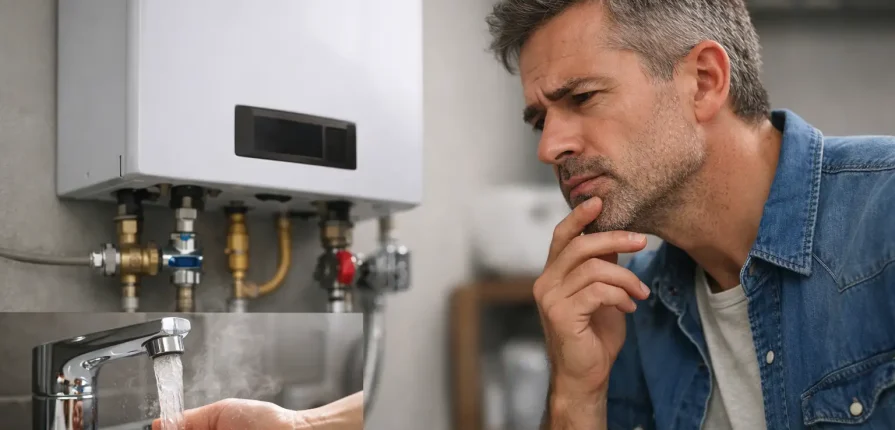
A tankless water heater not heating is more than an inconvenience when you are trying to shower, wash dishes, prepare a rental unit, or keep a busy commercial property running. Because tankless units heat water only when there is demand, the problem can feel sudden: cold water at every fixture, water that starts hot and turns cold, or a unit that will not fire at all. The right response depends on the symptoms, the fuel source, and whether the issue is safe to check without opening the unit.
Start With the Symptom, Not the Guess
Tankless water heaters are efficient and compact, but they rely on several components working together. The unit must receive power, detect water flow, confirm safe venting, ignite its burner or activate its electric heating elements, and maintain the programmed temperature. A failure at any point can leave you without hot water.
Before assuming the water heater has failed, check whether the problem affects every hot-water fixture. If one shower is cold while kitchen and bathroom sinks are hot, the issue may be a shower cartridge, mixing valve, or fixture-specific plumbing problem. If every fixture has cold water, the tankless unit or its incoming utilities deserve closer attention.
Also notice whether the water is completely cold or merely not hot enough. Lukewarm water can point to a temperature setting, high demand, mineral buildup, undersized equipment, or a failing component. Completely cold water more often suggests a power, gas, ignition, flow, or safety-lockout issue.
Common Reasons a Tankless Water Heater Is Not Heating
No power or a tripped breaker
Electric tankless water heaters require substantial electrical capacity. A tripped breaker, disconnected power supply, or failed internal electrical part can stop heating immediately. Gas tankless units still need electricity for the control board, ignition, fan, and display, so a power interruption can affect them too.
Check the electrical panel for a tripped breaker and reset it once if appropriate. If it trips again, do not keep resetting it. Repeated trips can indicate a wiring problem, overloaded circuit, or failed heater component that needs diagnosis by a qualified professional.
Gas supply or ignition trouble
For a gas tankless unit, confirm that other gas appliances are operating normally. If your gas range or furnace is also not working, the problem may involve the gas supply rather than the water heater itself. If other appliances work but the heater does not, the unit may have an ignition issue, gas valve problem, blocked vent, or a safety sensor preventing operation.
Do not remove the cover or attempt to service gas connections. If you smell gas, leave the area, avoid switches and flames, and contact the gas utility or emergency professionals from a safe location.
Low water flow through the unit
Tankless heaters need a minimum flow rate before they activate. A heavily clogged faucet aerator, showerhead, whole-house filter, or inlet screen can reduce flow enough that the heater never turns on. You may notice this most at a bathroom sink or low-flow shower fixture.
Try a different hot-water faucet and open it fully. If the unit heats normally at a higher-flow fixture but not at a specific one, clean or replace the affected aerator or showerhead. If low flow affects the entire building, there may be a plumbing restriction, clogged filter, failing pressure regulator, or valve issue that needs professional attention.
Mineral scale inside the heat exchanger
South Florida water conditions can contribute to mineral scale over time. Inside a tankless water heater, scale restricts water flow and insulates the heat exchanger, making it harder for the unit to transfer heat efficiently. The result may be fluctuating temperatures, reduced hot-water output, error codes, rumbling sounds, or shutdowns.
A tankless system should be flushed on a regular maintenance schedule, often annually, though the right interval depends on water quality, usage, and manufacturer requirements. Properties with several occupants, frequent laundry, commercial kitchens, or high-demand restrooms may need closer attention. Flushing is not just a performance service – it can help protect the heat exchanger from expensive premature damage.
A dirty inlet filter or blocked vent
Most tankless units include a cold-water inlet filter that catches debris before it enters the heater. When that filter becomes clogged, water flow drops and the system may not activate correctly. On gas units, intake or exhaust vent obstructions can also trigger a safety shutdown.
Leaves, nesting materials, storm debris, corrosion, or improper venting can create a vent problem. This is not a do-it-yourself repair. Venting affects combustion safety and carbon monoxide risk, so a trained technician should inspect the system and make the needed correction.
Temperature settings and demand that exceed capacity
Sometimes the water heater is working as designed, but the household or property is asking for more hot water than the unit can produce under current conditions. Tankless heaters have a flow-rate limit. If two showers, a dishwasher, and a washing machine run at once, the unit may not be able to raise incoming water to the desired temperature at every fixture.
This can be more noticeable when incoming water is cooler or when the unit was sized for lighter use. Raising the temperature setting is not always the answer. A setting that is too high can create scalding risk and may cause users to mix in more cold water, which can complicate temperature stability. A plumber can determine whether the issue is maintenance, a failed part, plumbing crossover, or a sizing mismatch.
Error codes, sensors, and internal component failures
A digital display is useful because it often provides an error code instead of leaving you to guess. Record the exact code, model number, and what happened before the failure. Did the unit stop during a shower? Did it work intermittently? Was there a recent power outage, plumbing repair, or storm?
Codes may relate to ignition, overheating, flame failure, airflow, exhaust temperature, water flow, or communication errors. Clearing a code without fixing its cause can lead to another shutdown. An experienced tankless water heater technician can test the relevant components and explain whether repair or replacement is the more cost-conscious option.
Safe Checks Before You Call for Tankless Water Heater Repair
A few basic checks can help narrow down the issue without putting you at risk. Confirm the unit has power, verify that the hot-water isolation valves are open, and test more than one fixture. Look at the display for error codes and check the breaker panel once. For gas units, make sure the gas shutoff valve has not been accidentally closed, but do not disconnect gas piping or remove the heater cover.
Avoid repeatedly resetting breakers, bypassing safety switches, taking apart venting, or forcing valves that feel stuck. Water heaters combine electricity, gas or high-voltage heating elements, pressurized water, and hot surfaces. A quick shortcut can turn a repair issue into a safety concern or cause additional damage.
For condominiums, schools, medical offices, restaurants, and other active properties, document which restrooms, sinks, or suites are affected. That information helps a technician identify whether the failure is isolated to one unit, one recirculation loop, or the entire hot-water system. It also helps property managers communicate clearly with tenants, staff, and visitors while repairs are underway.
When the Problem Needs a Professional Plumber
Call for service promptly if you have no hot water throughout the property, a recurring error code, discolored water, leaking connections, unusual noises, a breaker that trips repeatedly, or a gas smell. You should also call when hot water alternates between scalding and cold, especially in homes with children or older adults and in facilities serving the public.
A proper diagnostic visit should go beyond resetting the unit. The technician should inspect water flow, electrical supply, gas pressure when applicable, venting, filters, valves, heat-exchanger condition, error history, and installation setup. That approach identifies the actual cause and helps prevent a return visit for the same failure.
Caliber Plumbing provides straightforward tankless water heater diagnostics and repair for homeowners and property managers in Hollywood and surrounding South Florida communities. Our skilled technicians explain what failed, what the repair involves, and whether continued repair makes sense for the age and condition of the unit. We keep work areas clean and focus on practical solutions that restore reliable hot water.
If your tankless heater is older, repair may still be worthwhile when the issue is a serviceable part, scale buildup, or a maintenance need. Replacement may be the better value when there is major heat-exchanger damage, repeated failures, unsafe venting, or an undersized unit that has never met the building’s demand. The best choice depends on the equipment, installation, usage, and repair cost – not a one-size-fits-all answer.
Cold water is a clear signal to act, especially when a small issue can become a complete shutdown. A timely professional inspection can restore comfort now and help keep your hot-water system dependable when your home or property needs it most.