
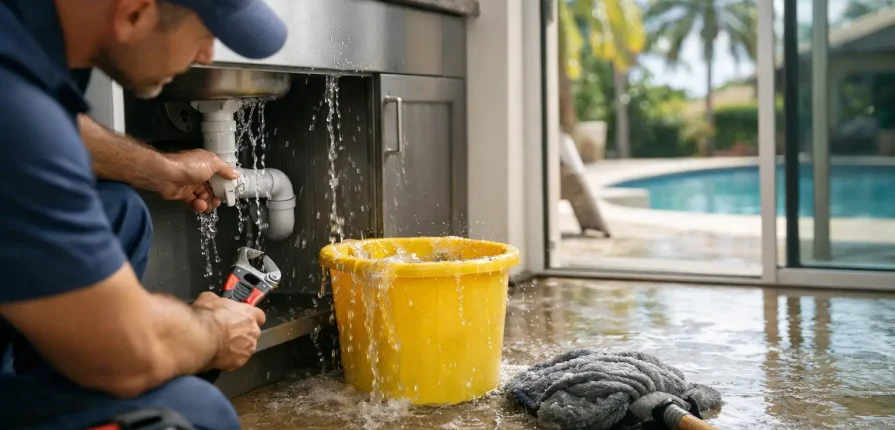
A flooded kitchen, bathroom, or utility room rarely starts as a major disaster. More often, it begins with a slow drain, a toilet that runs too long, a small drip under the sink, or a water heater that has started showing its age. Knowing how to prevent plumbing floods means recognizing those early signals and acting before water reaches flooring, walls, equipment, or neighboring units.
For South Florida homeowners and property managers, fast action matters. A small plumbing failure can damage cabinets and drywall, encourage mold growth, interrupt business operations, and create expensive restoration work. The good news is that many floods are preventable with routine attention, prompt repairs, and a clear plan for emergencies.
How to Prevent Plumbing Floods Before They Start
The most effective flood prevention is not a single product or repair. It is a regular habit of checking the plumbing systems that carry the most water and see the most use. Toilets, supply lines, water heaters, washing machines, sinks, and main drains should not be ignored simply because they seem to be working normally.
Know where your main water shutoff is
Every responsible adult in a home should know how to shut off the main water supply. In a commercial property, condominium, school, or medical facility, key staff members should know the location of the appropriate shutoff valves and who has authority to use them.
The main shutoff is commonly near the water meter, outside wall, garage, utility area, or mechanical room. Its location varies by property, so do not wait for a pipe break to search for it. Test the valve carefully if it has not been operated in years. A valve that is seized, leaking, or difficult to turn should be repaired or replaced before an emergency occurs.
For individual fixtures, local shutoff valves under sinks, behind toilets, and near water heaters can stop a smaller problem without shutting down the entire building. Make sure these valves are accessible. Stored boxes, cabinets, and equipment should not block them.
Replace aging supply lines and appliance hoses
Flexible water supply lines are small parts with a big failure risk. The hoses behind toilets, under sinks, and connected to washing machines are under constant water pressure. When an old rubber hose bursts, it can release a surprising amount of water in a short time.
Check supply lines for corrosion, cracks, bulges, rusted fittings, or moisture around connections. Replace deteriorating lines rather than waiting for a failure. Braided stainless-steel supply lines are often a dependable choice, but proper installation matters just as much as the material.
Washing machine hoses deserve special attention. If they are old, brittle, or bulging, replace them. Turn off the machine’s hot and cold supply valves when leaving for an extended period, especially in seasonal homes or vacant units. For high-use properties, an automatic leak detection and shutoff device may be worth considering.
Do not treat slow drains as a minor inconvenience
A drain that empties slowly is often giving advance notice of a developing blockage. Grease, soap residue, hair, wipes, food debris, and scale buildup can gradually reduce pipe capacity. Eventually, wastewater may back up through a sink, shower, floor drain, or toilet.
Avoid flushing wipes, paper towels, feminine products, cotton swabs, or other items labeled as disposable but not designed for plumbing. In kitchens, keep grease, oil, coffee grounds, rice, pasta, and fibrous food scraps out of the drain. A garbage disposal is helpful for limited food waste, but it is not a solution for heavy grease or large amounts of scraps.
Chemical drain cleaners can damage some pipes, seals, and fixtures, particularly when used repeatedly. They also create a hazard for anyone who later works on the drain. If a drain keeps slowing down, has a sewage odor, gurgles, or backs up in more than one fixture, professional drain cleaning and diagnosis are the safer next step.
Inspect toilets for hidden leaks and overflow risk
Toilets are one of the most common sources of indoor water damage. A toilet may leak from the tank, supply connection, shutoff valve, wax ring, or base. It can also overflow when there is a blockage in the toilet or drain line.
Listen for a toilet that refills on its own or runs long after flushing. That may be a worn flapper, fill valve issue, or adjustment problem. While a running toilet does not always cause a flood, it wastes water and can point to parts that need attention.
If water appears around the toilet base, do not assume it is ordinary condensation. It may indicate a failed seal or a drainage issue. Stop using the fixture until a skilled plumber can identify the cause. Repeated flushing after a toilet begins to rise can turn a manageable clog into a floor-level flood.
Maintain water heaters before they leak
A water heater holds dozens of gallons of water, which makes a neglected unit a significant flood risk. Look around the base for rust, dampness, corrosion, or small puddles. Check nearby pipes and connections as well. Water that seems to come from the tank may actually be coming from a fitting or temperature and pressure relief valve.
Traditional tank water heaters have a limited service life. As the tank ages, internal corrosion can eventually cause a leak that cannot be repaired. Regular inspections help property owners plan a replacement instead of dealing with an unexpected failure.
Tankless water heaters also need professional maintenance, especially in areas with mineral content that can affect performance. Regardless of the system type, do not ignore inconsistent hot water, unusual noises, visible corrosion, or water near the unit.
Watch for Signs of a Hidden Pipe Problem
Not every plumbing flood starts in plain sight. Pipes behind walls, under slabs, above ceilings, and inside cabinets can leak for weeks before a larger failure becomes obvious. South Florida properties should take unexplained moisture seriously, particularly after heavy rain when other water sources can make the cause harder to identify.
Pay attention to a sudden increase in the water bill, the sound of water moving when fixtures are off, warm spots on flooring, musty odors, peeling paint, warped baseboards, or persistent damp areas. These can be signs of a hidden leak or slab leak. Waiting for a visible burst may allow more water damage and structural moisture problems to develop.
Commercial and multi-unit properties should also monitor utility use for unusual patterns. A water-use increase during closed hours, overnight, or in an unoccupied unit deserves investigation. Catching the problem early can protect multiple suites or residences.
Keep Outdoor Plumbing and Drainage in Good Condition
Outdoor leaks can still create costly water loss, foundation moisture, and damage near entryways or equipment areas. Inspect hose bibs, irrigation connections, exposed pipes, and backflow devices for dripping, corrosion, or loose fittings. A leaking outdoor faucet is not always urgent, but it should be repaired before it worsens.
During severe weather preparation, clear debris from exterior drains and make sure runoff has a path away from the structure. Plumbing backups and stormwater problems are different issues, but blocked drains around a building can add to the damage when heavy rain arrives.
If your property has a sump pump, lift station, or other drainage equipment, schedule routine service. These systems are most likely to be needed when weather conditions are at their worst, not when it is convenient to arrange maintenance.
What to Do When Water Starts Spreading
Even careful maintenance cannot prevent every plumbing emergency. The goal is to limit damage safely while professional help is on the way. If water is coming from a supply line, fixture, or pipe, shut off the nearest fixture valve if possible. If that does not stop the flow, turn off the main water supply.
Avoid standing water near electrical outlets, power strips, appliances, or electrical panels. Do not use electrical equipment in a wet area. If sewage is backing up, keep people and pets away from the affected space because wastewater can contain harmful contaminants.
Then take these practical steps:
- Move valuables, electronics, and loose items away from the water if it is safe to do so.
- Use towels, buckets, or a wet vacuum only after the water source has been stopped.
- Take photos of the affected area for insurance documentation and repair planning.
- Call for emergency plumbing repair rather than repeatedly resetting fixtures, flushing toilets, or using chemical cleaners.
For a condominium or commercial property, notify the appropriate manager, maintenance contact, or building representative immediately. Water can travel through ceilings, walls, and shared plumbing lines, so quick communication helps protect adjacent units.
Schedule Repairs When the Problem Is Small
Plumbing maintenance is often less expensive and less disruptive than emergency restoration. A dripping pipe connection, corroded valve, recurring stoppage, or aging water heater may not feel urgent on a busy day. But those are the issues that deserve a professional evaluation before they become a flooded room at night or during a weekend.
Caliber Plumbing helps South Florida property owners identify the source of leaks, backups, fixture failures, and hidden pipe concerns with clear explanations and skilled service. A clean repair completed at the right time can protect your property, your schedule, and your budget.
The best time to address a plumbing warning sign is while it is still easy to control. A quick call for help today can keep a small leak from becoming the kind of water damage no property owner wants to wake up to.