
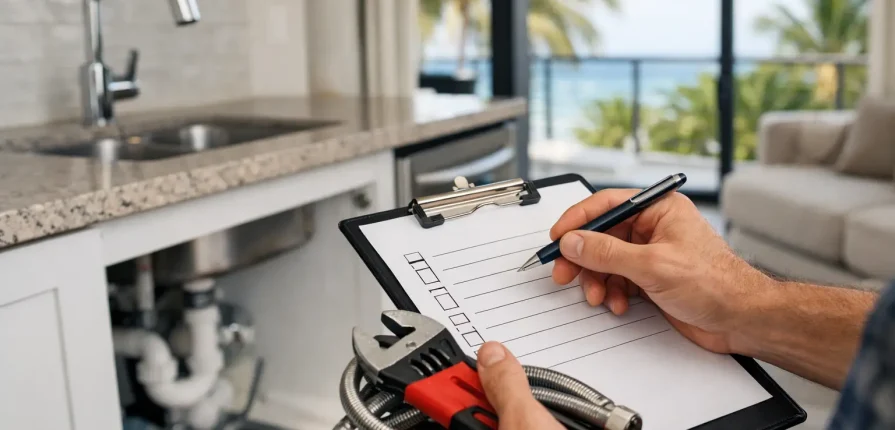
A slow drain in one condo can be a simple fixture clog. The same symptom in several units may point to a building drain line problem that needs fast attention. That is why a condo plumbing maintenance checklist should cover more than sinks and toilets inside individual residences. It needs to account for shared lines, common areas, aging fixtures, and the damage a hidden leak can cause to neighboring units.
For South Florida condo associations, property managers, and unit owners, regular plumbing checks are a practical way to prevent disruptive backups, water damage claims, and emergency repair calls. The right schedule depends on the building’s age, pipe materials, occupancy, and maintenance history, but the checklist below provides a dependable starting point.
Start With Responsibility Before Scheduling Service
Condo plumbing is not always straightforward because the location of a pipe does not automatically determine who is responsible for it. Association documents usually define the boundary between a unit owner’s plumbing and the association’s common plumbing systems. A supply line serving one unit may be an owner responsibility, while a vertical riser serving multiple floors may fall under the association.
Review the declaration, bylaws, and insurance requirements before a problem occurs. Keep a current diagram of shutoff valves, risers, cleanouts, water meters, and water heater locations. Property managers should also record which units have completed renovations, especially bathroom or kitchen work that may have changed fixture connections or added pressure to older piping.
When a leak appears, the first priority is to stop water flow and document the source. Assigning responsibility can happen after the immediate damage risk is under control.
Monthly Condo Plumbing Maintenance Checklist
A monthly walkthrough catches visible warning signs while they are still manageable. In occupied units, residents can report symptoms to management. In vacant units, a staff member or designated vendor should inspect the plumbing directly.
Check toilets for running water, loose bases, weak flushing, and moisture around the supply valve or floor. A toilet that runs after flushing wastes water, and a rocking toilet can damage the wax seal below it. If water appears at the base, do not keep using the fixture until a plumber identifies the cause.
Run water at kitchen, bathroom, and laundry faucets. Look below each sink for drips, corrosion, swollen cabinet materials, or musty odors. Pay attention to slow drains, gurgling, and water that backs up when another fixture is used. These symptoms can indicate a developing stoppage farther down the branch line.
Inspect garbage disposals for leaks, unusual noise, or poor draining. Disposals are not designed to handle grease, coffee grounds, fibrous vegetables, bones, or large quantities of food scraps. In a condo building, habits in one kitchen can contribute to a costly drain problem for more than one resident.
In common areas, inspect janitor closets, amenity kitchens, restrooms, irrigation connections, mechanical rooms, and any plumbing exposed in garages or service corridors. A small drip in a mechanical closet can continue for weeks without being noticed.
Quarterly Checks for Drains, Valves, and Water Pressure
Every three months, look beyond the fixtures residents use every day. Test accessible individual shutoff valves and common-area valves carefully. A valve that will not turn, leaks around the stem, or fails to stop water should be repaired or replaced before an actual emergency. Label every valve clearly so staff and residents do not lose valuable time searching during a leak.
Watch for changes in water pressure. Weak pressure can result from fixture aerator buildup, a partially closed valve, a failing pressure regulator, or a supply-side issue. Excessively high pressure is also a problem because it places added stress on supply lines, appliance hoses, water heaters, and fixture seals. A qualified plumber can test the pressure and recommend correction if it is outside a safe operating range.
Schedule drain cleaning based on real use and building history, not simply a one-size-fits-all calendar. High-use common bathrooms, commercial kitchen areas, or buildings with repeat backups may benefit from regular professional cleaning. On the other hand, aggressive or unnecessary drain treatments can be hard on older piping. Avoid chemical drain cleaners, especially when the drain is fully blocked. They can damage components, create hazards for maintenance staff, and complicate a professional repair.
Semiannual Water Heater and Appliance Inspection
Water heaters deserve special attention in condos because a failed tank, relief valve, or connection can damage several levels of a building. Twice a year, inspect the area around each accessible water heater for rust, moisture, corrosion at fittings, and signs of a leaking temperature and pressure relief valve. Confirm that the unit has a properly installed drain pan and that the pan drain can carry water safely away.
Listen for popping or rumbling from conventional tank water heaters. Sediment can build up over time, particularly where water conditions contribute to mineral accumulation. Whether flushing is appropriate depends on the age and condition of the heater. An older unit with neglected maintenance may need professional evaluation before flushing, since disturbing heavy sediment can reveal an existing weakness.
For tankless water heaters, follow the manufacturer-recommended service interval. These systems can be efficient and space-saving, but they still need periodic inspection and descaling when water conditions require it. Check washing machine hoses, dishwasher connections, refrigerator water lines, and ice maker supply lines at the same time. Replace deteriorated rubber hoses with higher-quality braided lines when appropriate.
Annual Professional Inspection for Shared Plumbing Systems
An annual inspection by expert plumbers gives a condo association a clearer picture of conditions that are not visible during routine walkthroughs. The scope should match the building. A newer, smaller property may need a straightforward review of valves, common drains, pressure, water heaters, and visible piping. An older high-rise or property with repeated leaks may need more detailed diagnostic work.
A professional annual review can include camera inspection of problem drain lines, evaluation of recurring stoppages, leak detection in suspected areas, pressure testing, and inspection of exposed risers or mechanical-room piping. This is especially valuable before major interior renovations, after a history of slab leaks, or when units report unexplained moisture, rising water bills, or mildew odors.
Do not wait for visible ceiling damage to investigate a potential leak. Water can travel along framing, pipe chases, and slabs before it becomes obvious. Early leak detection can reduce restoration costs and help prevent damage to electrical systems, flooring, drywall, and neighboring units.
Prepare Residents and Staff for Fast Action
Even a well-maintained property can have a burst supply line, sewer backup, or water heater failure. Every unit should have clear instructions for shutting off water and reporting a plumbing emergency. Management should maintain updated after-hours contact procedures and give staff access to the building’s main shutoff location.
Residents should report water stains, persistent drain odors, repeated toilet backups, and changes in water pressure promptly. They should not assume a ceiling stain is old or that a drain will clear on its own. Quick reporting protects the resident, the unit below, and the association’s common property.
For property managers, keep service records that identify the unit, date, symptom, work performed, and recommended follow-up. Patterns matter. Three separate kitchen backups on the same stack or multiple pinhole leaks in a particular area may point to a larger issue that deserves planned repair rather than repeated emergency calls.
When to Call a Professional Plumber Right Away
Some plumbing concerns should move directly from observation to service call. Call for professional help when there is an active leak, water coming through a ceiling, sewage backup, a main drain stoppage, no hot water in a shared system, a water heater leak, or a sudden unexplained increase in the water bill.
Caliber Plumbing serves South Florida condos with skilled diagnostics, drain cleaning, pipe repair, water heater service, and emergency plumbing repair. A knowledgeable technician can explain what is happening, isolate the immediate problem, and help management decide whether a repair, replacement, or further investigation makes the most sense.
A checklist will not eliminate every plumbing emergency, but it gives your building a better chance to find trouble early. Consistent inspections, clear responsibility, and fast action at the first sign of water where it does not belong can protect both the property and the people who call it home.